

Anterior Cervical Discectomy and Fusion (ACDF)
A specialized procedure to remove a herniated or degenerated disc in the neck, relieving nerve compression and stabilizing the cervical spine for lasting pain relief.
What is ACDF?
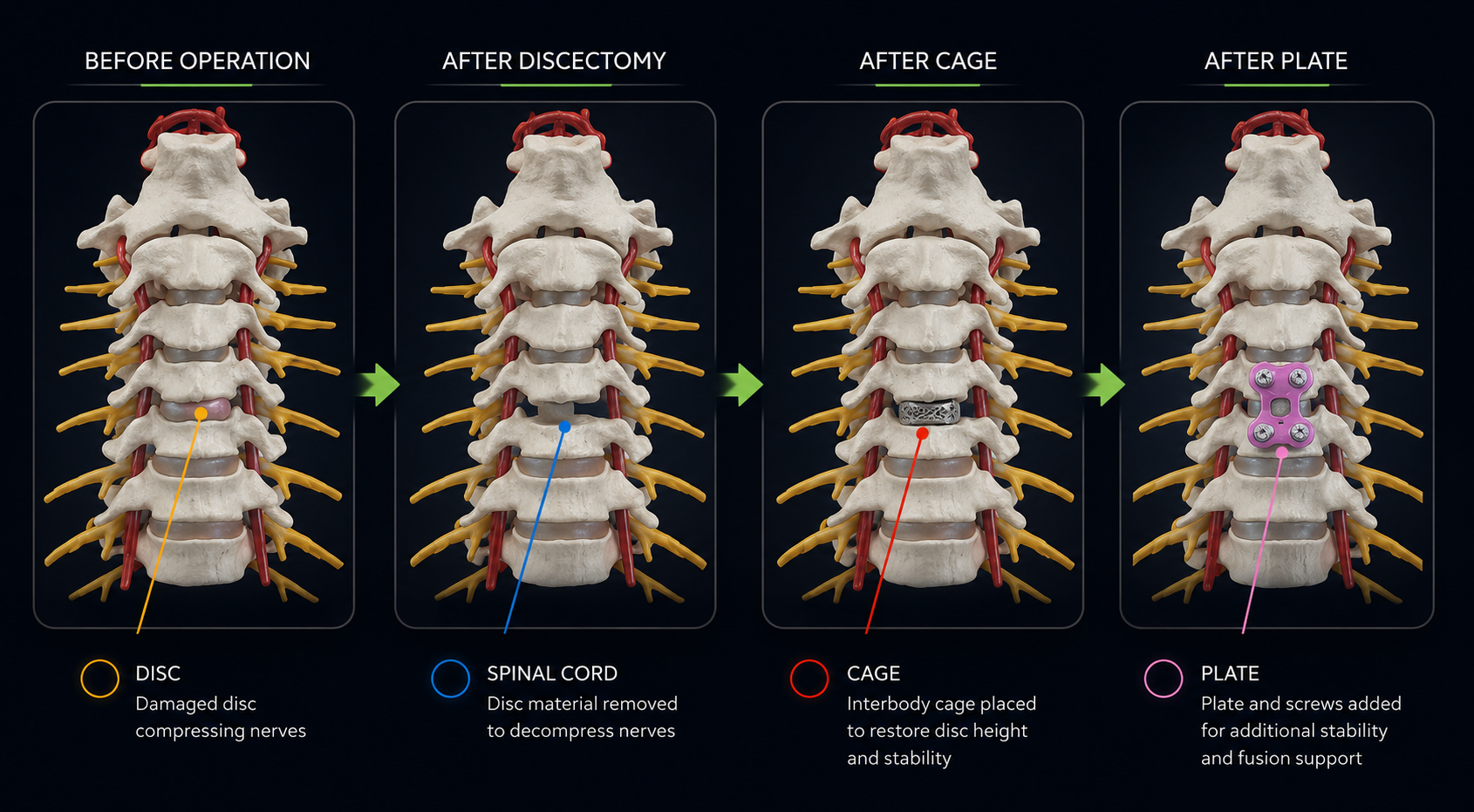
A discectomy is the removal of all or part of a degenerated disc that is causing nerve or spinal cord compression. While cervical discectomies used to be performed from a posterior approach (from behind), they are now typically performed from an anterior approach (from the front of the neck). This approach is safer and more direct, as it avoids manipulating the spinal cord.
Since almost all of the disc is removed during the procedure, a bone graft within an interbody cage is placed to replace the disc, preserve disc height, and encourage bony growth between the vertebrae above and below. A small titanium plate and screws are then placed to secure the entire structure. Most spine surgeons agree that this procedure provides for a faster return to work and better long-term outcomes compared to a discectomy alone.
Benefits of Anterior Cervical Discectomy and Fusion (ACDF)
Advanced techniques designed to optimize your recovery and outcomes.
Significant Pain Relief
Direct Nerve Decompression
Improved Spinal Stability
Restored Function and Mobility
High Success Rate
Faster Recovery via Anterior Approach
Who is a Candidate?
ACDF is typically recommended for patients experiencing the following symptoms due to nerve or spinal cord compression in the neck:
- Arm and/or hand pain, numbness, and/or weakness
- Neck and head pain, especially with movement
- Difficulty with balance or coordination
Candidates usually have diagnostic imaging (MRI, CT myelogram, or X-rays) confirming a herniated disc, spondylolisthesis, or spinal instability that has not responded to conservative treatments.
Recovery & Results
Most patients are able to return home within 1 to 2 days after surgery. Depending on your occupation and daily duties, you can expect to be off work for 2 to 8 weeks.
During the initial 8-week recovery period, you will be advised to avoid bending, twisting, lifting, or strenuous exercises. If your procedure involved more than two levels, you may be required to wear a cervical collar. Driving is not permitted while taking narcotic pain medications.
Procedure Overview
Incision and Access
A small incision is made on the front of the neck. The soft tissues are gently retracted to provide direct access to the cervical spine without disturbing the spinal cord.
Disc Removal
The damaged or degenerated cervical disc is carefully removed to fully decompress the spinal cord and affected nerve roots.
Graft Placement
An interbody cage filled with bone graft material is inserted into the empty disc space. This preserves the natural height of the disc space and promotes fusion.
Stabilization
A small titanium plate and screws are attached to the front of the vertebrae to stabilize the construct and hold everything securely in place while the bones fuse together.

Why Choose Dr. Shaad Bidiwala?
As a board-certified, fellowship-trained neurosurgeon with over 20 years of experience, Dr. Bidiwala specializes in complex and minimally invasive spine procedures. He has been voted by his peers as best doctor in D Magazine over 15 times, reflecting his commitment to exceptional patient outcomes and personalized care.
- Board-Certified Neurosurgeon
- Minimally Invasive Specialist
- Thousands of Successful Procedures
- Patient-First Philosophy
Frequently Asked Questions
Ready to Find Relief?
Take the first step toward a pain-free life. Schedule your consultation with Dr. Bidiwala to discuss your treatment options.