
Laminectomy for Spinal Stenosis
A surgical procedure designed to create more space in the spinal canal, relieving pressure on the spinal cord and nerves to restore mobility and reduce pain.
What is a Laminectomy?
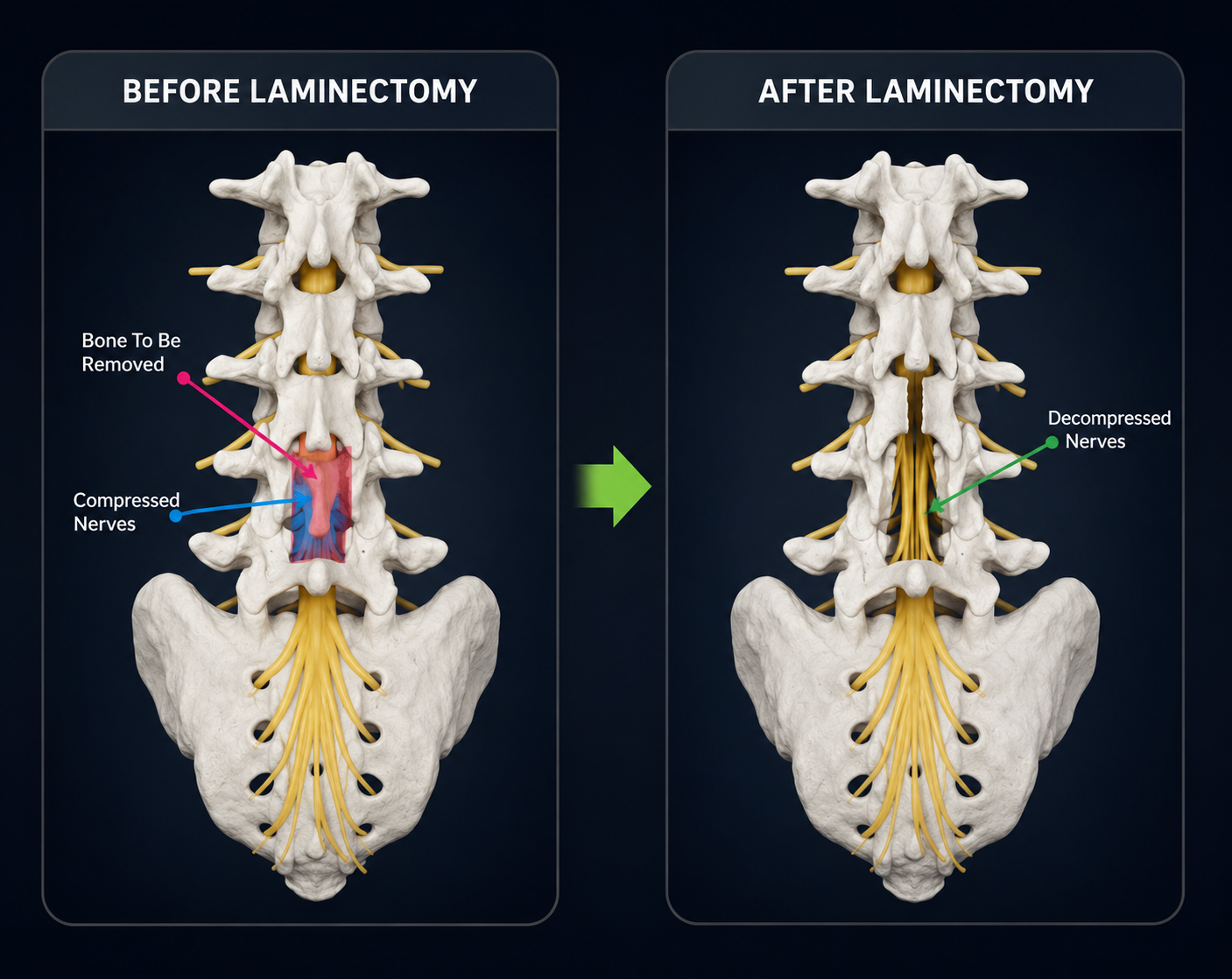
A laminectomy, also known as decompression surgery, involves removing the lamina—the back part of the vertebra that covers your spinal canal. This procedure enlarges your spinal canal to relieve pressure on the spinal cord or nerves.
This pressure is most commonly caused by bony overgrowths (bone spurs) within the spinal canal, a condition known as spinal stenosis. By removing the lamina and any associated bone spurs or thickened ligaments, the nerves are given the room they need to function properly without compression.
Conditions Treated
Benefits of Laminectomy for Spinal Stenosis
Advanced techniques designed to optimize your recovery and outcomes.
Significant Pain Relief
Improved Walking Distance
Restored Leg Strength
Reduction in Numbness/Tingling
Can be Minimally Invasive
Prevents Progressive Nerve Damage
Who is a Candidate?
A laminectomy is generally recommended if you have severe symptoms of spinal stenosis that significantly impact your quality of life. Classic symptoms include pain, numbness, or weakness in your legs that worsens when you stand or walk and improves when you sit or lean forward (neurogenic claudication).
Surgery is considered when physical therapy, medications, and epidural injections no longer provide adequate relief, or if you begin to experience progressive muscle weakness or loss of bowel/bladder control.
Recovery & Results
Depending on the extent of the surgery and whether a fusion was also performed, you may go home the same day or stay in the hospital for 1-2 days. You will be encouraged to get out of bed and walk shortly after surgery.
Pain at the incision site is normal but manageable. Most patients experience a rapid improvement in their leg pain and walking ability. Complete recovery can take a few weeks to a few months. Physical therapy is often prescribed to help rebuild core strength and flexibility.
Procedure Overview
Preparation
You are placed under general anesthesia and positioned face down on a specialized surgical table.
Incision
An incision is made over the affected vertebrae. Dr. Bidiwala uses minimally invasive techniques whenever possible to keep this small.
Decompression
The lamina and any bone spurs or thickened ligaments compressing the nerves are carefully removed.
Stabilization (If needed)
In some cases, if the spine is unstable, a spinal fusion may be performed at the same time.
Closure
The muscles are allowed to return to their normal position, and the incision is closed.

Why Choose Dr. Shaad Bidiwala?
As a board-certified, fellowship-trained neurosurgeon with over 20 years of experience, Dr. Bidiwala specializes in complex and minimally invasive spine procedures. He has been voted by his peers as best doctor in D Magazine over 15 times, reflecting his commitment to exceptional patient outcomes and personalized care.
- Board-Certified Neurosurgeon
- Minimally Invasive Specialist
- Thousands of Successful Procedures
- Patient-First Philosophy
Frequently Asked Questions
Ready to Find Relief?
Take the first step toward a pain-free life. Schedule your consultation with Dr. Bidiwala to discuss your treatment options.